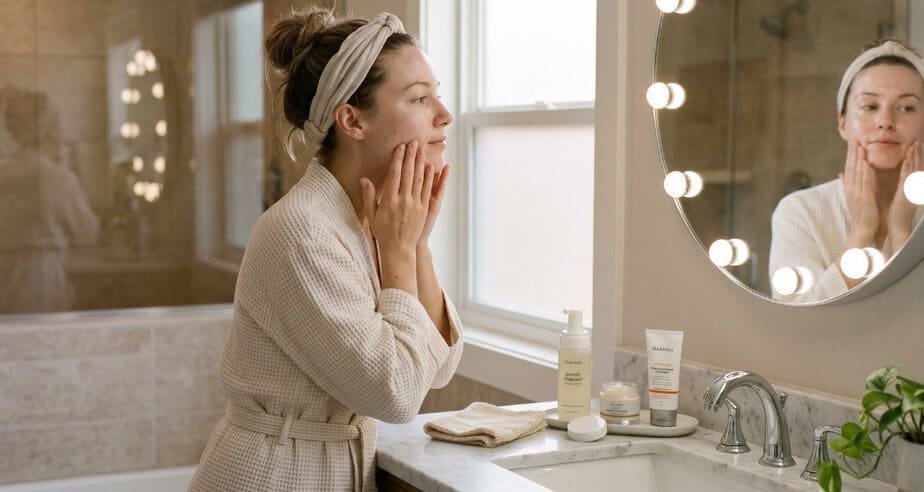
A skin care routine does not need to involve a cabinet full of products or a complicated schedule. For many people, the better approach is a manageable plan built around their skin type, daily habits, climate, and specific concerns. Local dermatology support can make that plan more accurate and easier to maintain, especially when over-the-counter products have not delivered consistent results.
In American Fork and nearby Utah communities, skin often faces dry air, strong sun exposure, seasonal temperature changes, and irritation from indoor heating. A routine that works well in a humid climate may leave Utah skin tight, flaky, or more sensitive. The right plan should account for those conditions rather than relying on general advice.
Start With the Problems That Affect Daily Life
Before buying new products, identify what you want to improve. Common concerns include persistent dryness, acne breakouts, uneven tone, redness, sun spots, or changes in texture. It is useful to note when the problem appears, what makes it worse, and which products have already caused irritation.
This information gives a skin care professional a clearer starting point. Someone dealing with occasional blemishes may need a different approach from someone with painful cystic acne or recurring irritation around the nose and cheeks. Treating every concern with the strongest available product can create more dryness without addressing the underlying issue.
A practical routine usually begins with three basics:
- A gentle cleanser that does not leave the skin tight
- A moisturizer suited to the skin’s oil and dryness levels
- Broad-spectrum sunscreen used consistently during daylight hours
Additional products should solve a defined problem. Adding several new ingredients at once makes it difficult to know what is helping and increases the risk of irritation.
Adjust the Routine for Utah’s Seasons
Skin care planning should change when the environment changes. During cold months, low humidity and indoor heating can weaken the skin barrier, which is the outer layer that helps retain moisture and protect against irritants. A thicker moisturizer, shorter showers, and a fragrance-free cleanser may be more useful than adding multiple treatments.
Summer brings a different set of concerns. Outdoor recreation, increased sweating, and stronger sun exposure can contribute to clogged pores, irritation, and uneven pigmentation. Lightweight moisturizers, reapplication-friendly sunscreen, hats, and shade can help reduce the cumulative effects of ultraviolet exposure.
Make Changes One at a Time
Seasonal adjustments work best when they are gradual. Introduce one new product, use it as directed, and watch for changes over several days. Burning, swelling, significant peeling, or a rash is a reason to stop the product and seek professional guidance rather than pushing through the reaction.
For people who need help sorting through recurring symptoms or choosing appropriate treatment, consulting a dermatologist in American Fork Utah can provide a more focused path than repeatedly switching products. A professional evaluation may also distinguish between conditions that look similar but require different care.
Build a Plan That Fits Your Budget and Schedule
A skin care plan is only useful if it can be followed. Business owners, parents, students, and shift workers may not have time for a seven-step morning and evening routine. A short routine completed consistently is usually more practical than an elaborate routine used only occasionally.
Budget matters as well. Spending more does not automatically produce better results, and purchasing multiple products before identifying the main concern can create unnecessary expense. A better process is to prioritize the essentials, add one targeted treatment when needed, and review progress after a reasonable period.
Keep a simple record of what you use and how your skin responds. Take a photo under similar lighting once every few weeks, rather than judging changes from day to day. This makes gradual improvement easier to see and helps identify whether a product is worth continuing.

Know When Professional Support Is the Practical Choice
Some concerns deserve more than trial and error. Seek professional input when acne is painful, scarring, or affecting confidence; when a rash keeps returning; when itching interferes with sleep; or when a spot changes in color, shape, size, or behavior.
The goal is not to create a complicated regimen. It is to build a sensible system that protects the skin, addresses the main concern, and fits real life. With seasonal adjustments and local guidance when needed, skin care becomes less about chasing products and more about making steady, informed decisions.
Read next: The Menopausal Skincare Guide
References:
Denda, M., Sato, J., Tsuchiya, T., Elias, P. M., & Feingold, K. R. (1998). Low humidity stimulates epidermal DNA synthesis and amplifies the hyperproliferative response to barrier disruption: Implication for seasonal exacerbations of inflammatory dermatoses. Journal of Investigative Dermatology, 111(5), 873–878. https://doi.org/10.1046/j.1523-1747.1998.00364.x
Engebretsen, K. A., Johansen, J. D., Kezic, S., Linneberg, A., & Thyssen, J. P. (2016). The effect of environmental humidity and temperature on skin barrier function and dermatitis. Journal of the European Academy of Dermatology and Venereology, 30(2), 223–249. https://doi.org/10.1111/jdv.13301
Guan, L. L., Lim, H. W., & Mohammad, T. F. (2021). Sunscreens and photoaging: A review of current literature. American Journal of Clinical Dermatology, 22(6), 819–828. https://doi.org/10.1007/s40257-021-00632-5
Hughes, M. C. B., Williams, G. M., Baker, P., & Green, A. C. (2013). Sunscreen and prevention of skin aging: A randomized trial. Annals of Internal Medicine, 158(11), 781–790. https://doi.org/10.7326/0003-4819-158-11-201306040-00002
Qiu, H., Long, X., Ye, J. C., Hou, J., Senee, J., Laurent, A., Bazin, R., Flament, F., Adam, A., Coutet, J., & Piot, B. (2011). Influence of season on some skin properties: Winter vs. summer, as experienced by 354 Shanghaiese women of various ages. International Journal of Cosmetic Science, 33(4), 377–383. https://doi.org/10.1111/j.1468-2494.2011.00639.x