
As you step into your 50s and approach menopause, many women notice a distinct shift. Hot flashes, insomnia, back pain, mood swings—these classic menopausal symptoms often trace back to one core issue: a sharp decline in estrogen levels. This hormonal drop doesn’t just trigger discomfort; it also accelerates the loss of key nutrients and reduces how efficiently your body absorbs them.
What Women Face During Menopause
Statistics show that women lose 1% to 2% of bone mass per year during menopause. Without intervention, the risk of developing osteoporosis down the line increases significantly. At the same time, lower estrogen levels can disrupt lipid metabolism, raising the likelihood of cardiovascular disease. On top of that, basal metabolic rate drops by an average of 5% to 10% in menopausal women, meaning your body burns energy less efficiently. If you keep eating the same way you always have, weight gain and fat accumulation become all too easy. That’s why dietary adjustments during this stage need to do two things: fill specific nutritional gaps and keep caloric intake in check.
Calcium and Vitamin D: Protecting Bone Health
Calcium is one of the most critical nutrients for menopausal women. The estrogen decline speeds up bone loss, and getting enough calcium helps slow that process and prevent osteoporosis. Women over 50 should aim for 1,000 to 1,200 mg of calcium per day. Dairy products are an excellent source—every 100 ml of milk provides about 104 mg of calcium, so drinking 300 to 500 ml daily can cover roughly half your needs. Yogurt and cheese are also great options. If you’re lactose intolerant, go for low-lactose or lactose-free milk, or turn to calcium-rich foods like soy products, dark leafy greens, and nuts. For example, 100 grams of tofu contains about 164 mg of calcium, and 100 grams of boiled spinach provides roughly 66 mg.
Calcium absorption, however, can’t happen without vitamin D. Moderate sun exposure helps your skin synthesize it naturally. Aim for 15 to 30 minutes of sunlight a day, avoiding the harsh midday hours. If you can’t get enough sun, a vitamin D supplement is a practical alternative—generally, 400 to 800 IU per day is a common and safe range.
Soy Isoflavones: The Power of Plant Estrogens
Soy isoflavones are natural plant compounds with a molecular structure strikingly similar to human estrogen. They bind to estrogen receptors in the body and exert a dual regulatory effect: when estrogen levels are low, they step in to provide weak estrogenic activity; when levels are high, they can actually block stronger estrogens from binding. Studies suggest that consuming 50 to 100 mg of soy isoflavones daily may help ease menopausal symptoms like hot flashes and night sweats.
Soy and its derivatives are the primary sources. Every 100 grams of soybeans contains about 128 mg of isoflavones, and 100 grams of tofu provides around 27 mg. Common options like soymilk, tofu skin, and dried tofu are all good choices to include in your diet. That said, more isn’t always better—aim for about 50 to 100 grams of soy or its equivalent per day, and there’s no need to overdo it.
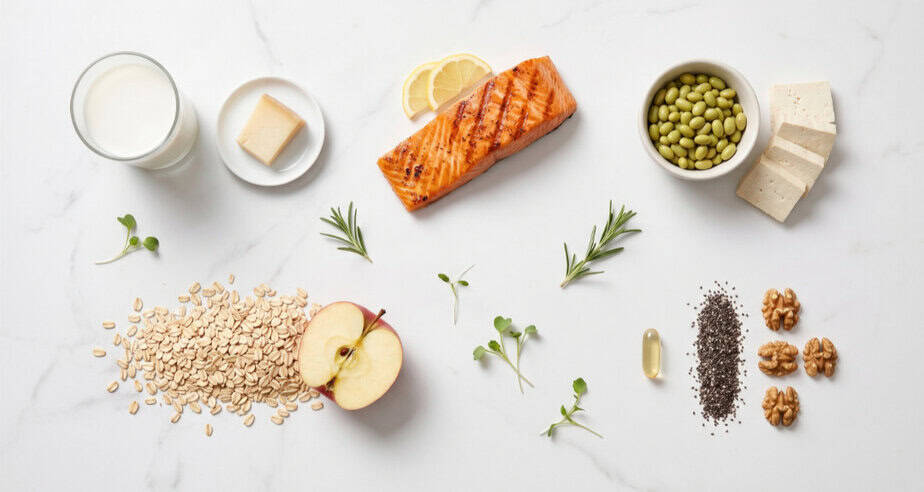
Dietary Fiber: A Friend to Gut Health and Weight Management
As we age, intestinal motility tends to slow, making constipation more common. Dietary fiber helps by increasing stool bulk and promoting regular bowel movements, which can both prevent and relieve constipation. Fiber also provides a strong sense of fullness, which curbs the urge to overeat high-calorie foods and supports weight control.
There are two types of fiber, and both matter. Soluble fiber—like the beta-glucan in oats—forms a gel-like substance in the gut that slows carbohydrate digestion and helps steady post-meal blood sugar. Insoluble fiber, found in vegetables and whole grains, adds bulk and speeds up transit time. For reference, 100 grams of rolled oats contain about 10.6 grams of fiber, and a 100-gram apple with its skin on provides roughly 2.4 grams. Menopausal women should aim for 25 to 30 grams of total dietary fiber per day.
Omega-3 Fatty Acids: A Shield for Heart Health
When estrogen drops, lipid metabolism often goes awry—LDL (“bad”) cholesterol tends to rise while HDL (“good”) cholesterol falls, increasing cardiovascular risk. Omega-3 fatty acids step in here with their ability to regulate blood lipids, reduce inflammation, and lower blood viscosity, all of which support heart health.
The two most active forms, EPA and DHA, are abundant in fatty fish like salmon, tuna, and cod. A 100-gram serving of salmon delivers about 2.7 grams of omega-3s. If fish isn’t your thing, you can still get alpha-linolenic acid (ALA) from flaxseeds, chia seeds, and walnuts—though your body converts ALA to EPA and DHA at a relatively low rate. If you prefer a more direct approach, fish oil supplements are an option, but be sure to check with your doctor first.
Read next: Menopause And Sleep Disorders: Causes And Treatments