Most people know the basics of keeping their hearts healthy. Eat more vegetables, exercise regularly, manage stress, and avoid smoking. Fitness trackers remind us to move, smartwatches monitor our heart rates, and grocery stores are filled with products promising to support cardiovascular wellness.
But there’s one important part of heart health awareness that rarely makes it onto our daily wellness checklists.
Knowing what to do when someone’s heart suddenly stops beating effectively.
We spend considerable time learning how to prevent health problems, yet far less time preparing for medical emergencies. While prevention remains essential, understanding how to recognize cardiac arrest and respond appropriately deserves a place in everyday conversations about heart health.
Heart Health Is More Than Prevention
When someone mentions cardiovascular health, what comes to mind?
Perhaps it’s a morning walk, a Mediterranean-style meal, or a reminder to schedule a blood pressure check.
These habits matter. Regular physical activity, balanced nutrition, and appropriate medical care can help reduce cardiovascular risk.
However, heart-related emergencies can still occur, including among people who appear healthy.
Sudden cardiac arrest happens when the heart’s electrical system malfunctions, causing it to stop pumping blood effectively.
Without immediate intervention, the brain and other vital organs quickly become deprived of oxygen.
This is where heart health awareness needs to extend beyond prevention.
Knowing how to recognize an emergency and take appropriate action can be just as important as understanding everyday wellness habits.
Cardiac Arrest and Heart Attack Aren’t the Same
One of the biggest gaps in public heart health knowledge is the confusion between a heart attack and sudden cardiac arrest.
Although the two conditions can be related, they aren’t identical.
A heart attack generally occurs when blood flow to part of the heart muscle becomes blocked.
Someone experiencing a heart attack may report chest discomfort, shortness of breath, nausea, or pain spreading to the arm, back, neck, or jaw.
Sudden cardiac arrest, on the other hand, involves an electrical problem that prevents the heart from pumping blood effectively.
A person experiencing cardiac arrest typically becomes unresponsive and stops breathing normally.
A heart attack can sometimes trigger cardiac arrest, but not every heart attack leads to one.
Understanding this distinction matters because the immediate response is different.
Someone with possible heart attack symptoms needs urgent medical evaluation. A person in cardiac arrest needs immediate emergency activation, CPR, and an AED as soon as possible.
The First Few Minutes Matter
Imagine enjoying lunch with friends when someone suddenly collapses.
At first, people might assume the person has fainted. Someone offers water, another suggests giving them space, and precious moments pass while everyone waits for a response.
This hesitation can be dangerous.
If a person is unresponsive and not breathing normally, cardiac arrest should be suspected.
Emergency services should be contacted immediately, and CPR should begin.
For an adult, chest compressions help maintain some circulation until additional medical assistance arrives.
An automated external defibrillator (AED) can analyze the heart’s rhythm and deliver a shock when appropriate.
The earlier these actions occur, the better the opportunity for a successful resuscitation.
This is why public awareness matters. Emergency responders provide essential care, but people nearby may need to act before professionals arrive.
Why CPR Education Belongs in Wellness Conversations
We encourage people to learn about nutrition labels, exercise techniques, and preventive screenings.
Why shouldn’t CPR knowledge receive similar attention?
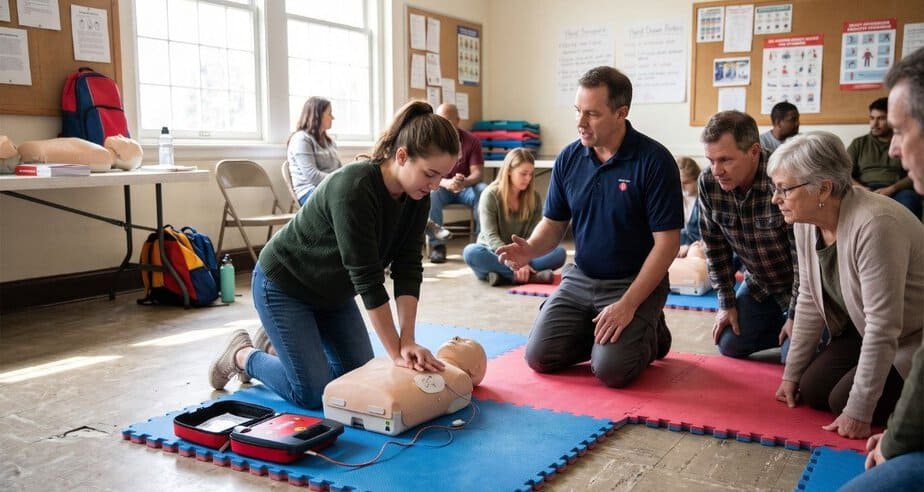
Learning CPR helps people understand how to recognize cardiac arrest, call for assistance, perform chest compressions, and use an AED.
For busy adults, exploring cpr certification online can be a convenient way to begin studying essential resuscitation principles.
Online coursework may offer flexible lessons and opportunities to review important information at a comfortable pace.
However, CPR is a physical skill, and hands-on practice with a training manikin provides valuable experience and feedback.
Anyone who needs certification for employment should also verify whether their workplace requires an instructor-led course or practical skills assessment.
The objective shouldn’t simply be obtaining a certificate. It should be developing the knowledge and practical readiness to respond appropriately during an emergency.
AED Awareness Is Another Overlooked Skill
You’ve probably walked past an AED without giving it much thought.
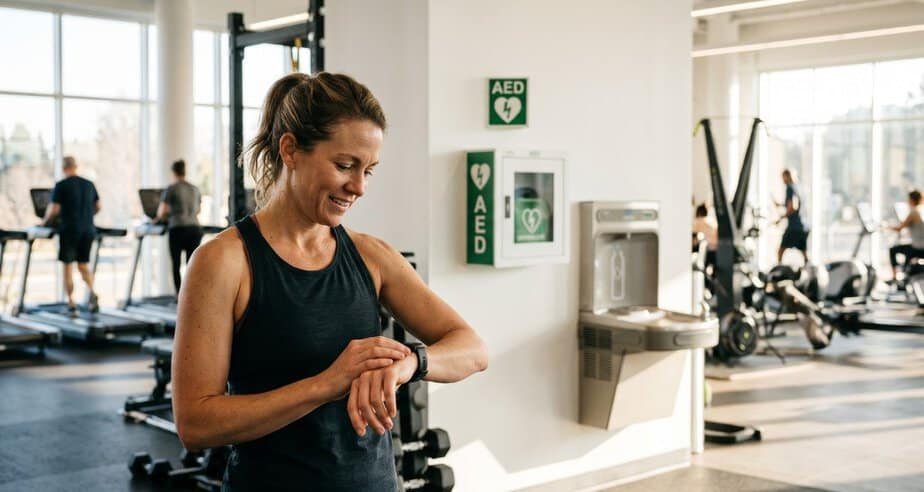
These devices are increasingly found in airports, schools, gyms, workplaces, and other public locations.
Yet many people don’t know what an AED does or how to use one.
An AED is designed to analyze heart rhythm and determine whether a shock is appropriate.
The device provides instructions that guide users through the process.
It won’t advise a shock unless its analysis identifies a rhythm for which defibrillation is indicated.
Knowing where AEDs are located and becoming familiar with their operation can reduce hesitation during an emergency.
The next time you visit your gym or workplace, take a moment to notice whether an AED is available.
It’s a small habit that supports a more prepared community.
Heart Health Awareness Should Include Families
Emergency preparedness isn’t only for healthcare professionals.
Parents, caregivers, teachers, and other family members may be the first to notice when someone needs urgent help.
A household safety plan can include emergency contact numbers, accessible medical information, and age-appropriate discussions about seeking help.
Older children can learn how to recognize emergencies and contact emergency services.
Adults can review CPR procedures and learn where nearby AEDs are located.
Families should also understand that CPR techniques differ for adults, children, and infants.
Choosing training appropriate to your household’s needs can help make emergency education more relevant.
These conversations don’t need to be frightening. They can be approached in the same practical way families discuss fire safety or what to do during severe weather.
Building a Culture of Everyday Readiness
Heart health awareness becomes more meaningful when it extends beyond individual habits.
Workplaces can organize CPR training opportunities. Fitness centers can ensure staff understand emergency procedures. Community groups can encourage members to learn basic lifesaving skills.
Healthcare providers can also help by discussing emergency preparedness alongside cardiovascular risk reduction.
Regular refreshers are important because CPR knowledge and practical skills can fade over time.
Creating a culture of readiness doesn’t require everyone to become a medical expert.
It means helping more people recognize emergencies, seek professional assistance quickly, and provide appropriate early support.
A More Complete Approach to Heart Health
Taking care of your heart involves the choices you make every day: staying active, eating well, managing health conditions, and attending recommended medical appointments.
But comprehensive heart health awareness should also include preparing for the unexpected.
Understanding cardiac arrest, learning CPR, and recognizing the role of AEDs can turn ordinary bystanders into people who are better equipped to help.
Because protecting heart health isn’t only about keeping hearts healthy. It’s also about knowing how to respond when someone’s heart suddenly needs help.
Read next: Guide To Assessing Health Before You Begin A New Diet
References for further reading:
Hallstrom AP, Ornato JP, Weisfeldt ML, et al. Public-access defibrillation and survival after out-of-hospital cardiac arrest. N Engl J Med. 2004;351(7):637-646.
https://doi.org/10.1056/NEJMoa040566
Holmberg MJ, Vognsen M, Andersen MS, Donnino MW, Andersen LW. Bystander automated external defibrillator use and clinical outcomes after out-of-hospital cardiac arrest: a systematic review and meta-analysis. Resuscitation. 2017;120:77-87.
https://doi.org/10.1016/j.resuscitation.2017.09.003
Song J, Guo W, Lu X, Kang X, Song Y, Gong D. The effect of bystander cardiopulmonary resuscitation on the survival of out-of-hospital cardiac arrests: a systematic review and meta-analysis. Scand J Trauma Resusc Emerg Med. 2018;26:86.
https://doi.org/10.1186/s13049-018-0552-8
Yan S, Gan Y, Jiang N, et al. The global survival rate among adult out-of-hospital cardiac arrest patients who received cardiopulmonary resuscitation: a systematic review and meta-analysis. Crit Care. 2020;24(1):61.
https://doi.org/10.1186/s13054-020-2773-2
Myat A, Song KJ, Rea T. Out-of-hospital cardiac arrest: current concepts. Lancet. 2018;391(10124):970-979.
https://doi.org/10.1016/S0140-6736(18)30472-0
Leng Z, Li J, Tang K, Shi J. Effect of bystander CPR on survival after out-of-hospital cardiac arrest: a systematic review and meta-analysis. Shock. 2026;66(3):579-590.
https://doi.org/10.1097/SHK.0000000000002812