
A few packets at the bike shop, an online refill, and a coffee during the Sunday ride can disappear into the wider cost of cycling. Separately, each purchase seems small. Together, they are worth including in a monthly budget.
Budgeting for caffeine products does not require choosing the cheapest item or giving up the cafe stop. It means understanding what is being bought, comparing the full cost, and avoiding purchases that end up forgotten in a cupboard. For adult recreational cyclists, a simple record is usually enough.
Keep optional caffeine separate from essential ride supplies
Caffeine is not a replacement for food, fluids, or sleep. It also cannot fix the lack of fuel behind a bonk. A dedicated caffeine product therefore should not be treated as a substitute for the supplies a ride requires.
Start by distinguishing between products bought for fueling and those bought primarily for caffeine or enjoyment. A caffeinated gel can serve more than one purpose, so record that purchase once rather than counting its full price in two categories.
The categories do not have to be perfect. Their purpose is to make optional spending visible without encouraging cuts to food and fluid planning. A rider reviewing expenses should still be able to see what was spent on basic ride supplies.
Compare the full price, not just the box
Two packages with different counts are difficult to compare by sticker price alone. Divide the total purchase cost by the number of labeled servings to get a starting figure. Then ask whether those servings are likely to be used before the product expires.
For example, a hypothetical $24 box containing twelve servings works out to $2 per serving before delivery. A hypothetical $30 box with twenty servings works out to $1.50. Those figures describe purchase costs, not how much caffeine a cyclist should consume.
The lower figure is useful only if the product suits the buyer. A bargain box that goes mostly unused can be worse value than a smaller purchase. Different ingredients and caffeine content also mean that matching serving counts does not make two products equivalent.
Compare formats by the job they do
Coffee, canned drinks, caffeinated gels, and powder packets provide different experiences. Some include carbohydrates; others do not. Some require a bottle or a stop, while others fit into a pocket.
When comparing caffeine for cyclists, include single-serve packets in the same practical review as drinks and gels: price, label information, taste preferences, storage, and carry space. No format is automatically the cheapest or the best fit.
Convenience can justify a higher price, but it helps to name the convenience. Is it easier to pack, available at the local shop, or simply more enjoyable? Paying for a feature that matters is different from paying for a feature that never gets used.
Count delivery, discounts, and recurring orders
Shipping belongs in the comparison. A discounted product with a delivery charge may cost more overall than a locally available alternative. Include applicable taxes and fees when comparing final checkout totals.
Free-shipping thresholds deserve particular attention. Adding unwanted products to avoid a smaller delivery fee is not necessarily a saving. The relevant number is the total amount leaving the account, not the size of the discount displayed beside it.
Subscriptions can be worthwhile when the price and flexibility suit the buyer. Check the delivery charge, cancellation terms, and ability to skip an order. An apparent discount loses its appeal if packages arrive faster than they are used.
Treat a first purchase as a trial, not a stockpile
A small initial purchase limits the cost of discovering that a flavor, texture, or package does not work for you. This is a purchasing decision, not a recommendation about consumption.
Before buying in bulk, consider storage instructions, expiration dates, and how much room is available. Use actual past purchases as a guide rather than an optimistic picture of future riding. A busy month, an injury, or a change in routine can leave a large order untouched.
The same principle applies to mixed bundles. Count only the items you genuinely want when judging value. Extra flavors that remain unopened are not a useful bonus.
Give cafe stops their own line
A ride coffee is partly a drink and often partly a social occasion. Comparing it only with the price of a packet misses why someone buys it.
Record cafe spending separately if that makes the budget clearer. Food bought at the same stop can remain in the food category. There is no need to pretend that a valued group-ride tradition and a packaged product provide identical benefits.
Build a monthly total you can revisit
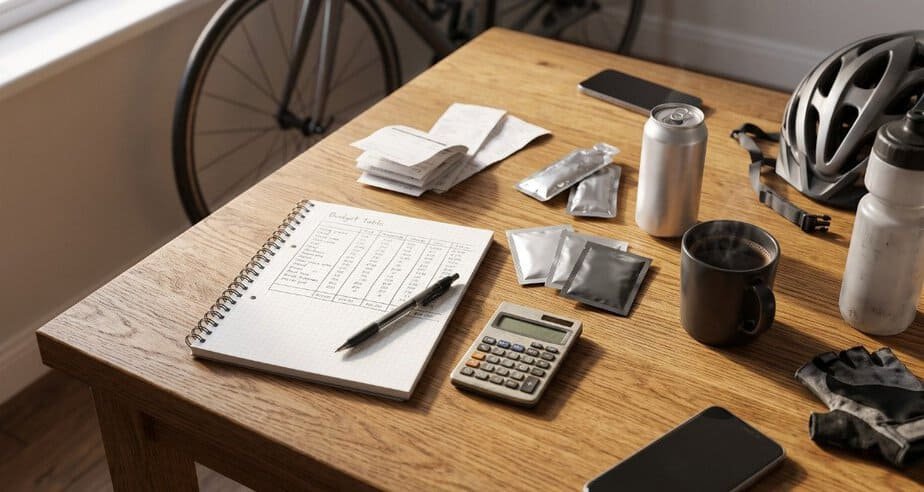
Here is a purely illustrative purchase budget: $10 for packaged products, $6 for delivery, and $12 for cafe coffees produce a monthly total of $28. These are invented budgeting figures, not current product prices or a suggested consumption plan.
Replace each line with actual receipts, then review it after a month. Delivery might be the easiest expense to reduce, or an unused subscription might explain the overspending. The aim is not to make every ride a financial calculation. It is to keep optional caffeine purchases deliberate, useful, and comfortably within the wider cycling budget.
Read next: How Much Caffeine In Coffee? What’s Its Effects On Health?