The Importance of Verifying Skills in Real Time
Even if a training record is in place to show what training an employee has undertaken, there may not be any evidence of how competent they are to carry out those tasks safely in a busy environment. Nurses and care workers may not be as competent as they appear and may require refreshing, supervising or re-testing on certain tasks. Competence will be most important in situations where the staff are under pressure or roles have changed. Having up-to-date evidence can help managers identify any issues, provide the right support and make more informed staffing decisions. Evidence of competence is part of ensuring patient safety along with having the right number of staff, clear processes and clinical supervision in place.
The gap between certified and competent
In healthcare organisations there is more to knowing whether employees have undertaken training than just knowing they have done the course on manual handling, passed a medication check during onboarding or completed an infection control module. While having a green tick in the LMS is great to have, it does not necessarily show how an employee would perform in real time. A nurse may know the procedures for wound care but would benefit from being supervised whilst practicing a certain technique. Similarly, care workers may benefit from practicing how they would deal with a falls incident even though they have undertaken falls prevention training. Assessing clinical competence provides additional evidence that can be gathered through observation, simulation and supervision. This can help the team understand how competent they are.
Sometimes practical assessments can be seen as a one-off activity. The skill may not have been used regularly in the last 18 months or they may only have demonstrated it whilst being closely supervised.
Why we see risk in real time
If a nurse is redeployed to a new ward or a care worker is asked to do something they have not practised recently due to staffing shortages, managers will want to ensure they have the right skills to do the task. If it is difficult to find details about the employee’s skills, this can make managing a pressured shift more difficult. According to the WHO approximately 1 in 10 patients experience harm whilst receiving healthcare. Over half of these incidents are preventable. There are many reasons why incidents occur such as lack of communication, medication errors, staffing pressures and lack of development of competence. This does not tell us how many incidents are directly caused by a lack of verification of skills.
However, it demonstrates how important it is to ensure that the workforce are competent before any issues occur. Looking at training records can help to understand what happened. However, having up-to-date practical assessments can help to make more informed decisions. No verification system can completely remove the risk of harm.
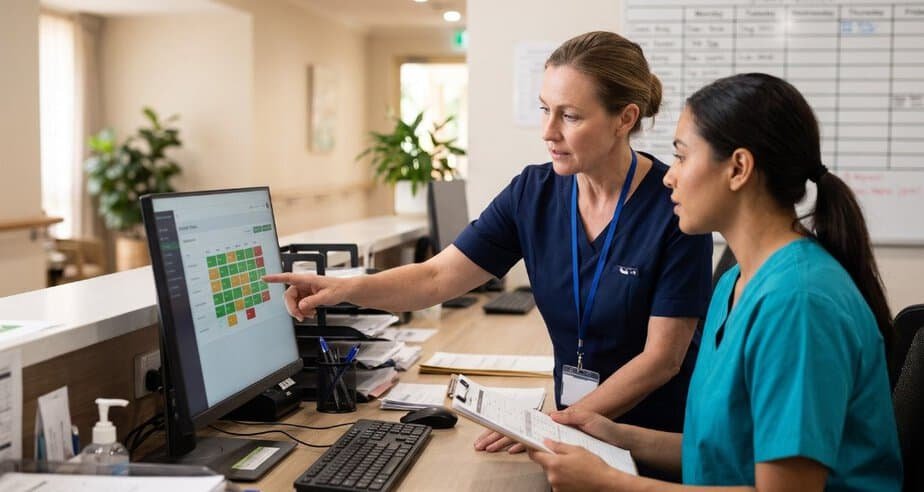
During high demand periods such as an outbreak of disease, workers may be redeployed to areas they are not familiar with. A real time skills matrix can help managers identify who has the right experience to complete the task, who will need supervision and who will need to be re-assessed. It will not provide additional staff but can help to give a clearer picture of what the workforce are capable of doing in a timely decision.
Where training records are lacking
Hospitals and aged care organisations often have a mix of spreadsheets, paper sign-offs and LMS data to keep track of training undertaken. All can be very useful but information may not be in one place. Whilst an LMS can help to show what training has been undertaken, it may not show when the skill was last observed, by whom and if they need to be re-assessed. A spreadsheet can provide this information but requires consistent data entry.
Some skills may not be used regularly so could require refreshing or re-assessing. A certificate from a year ago and a practical assessment from last month are both valid but will provide different information. Managers will need enough information to decide whether the employee is prepared for the task and what support they may need.
Care quality frameworks will usually look at the employee’s capability, training and supervision. For example, The strengthened Aged Care Quality Standards in Australia require relevant providers to have workforce planning in place and put in place systems to support staff with the right skills, training and supervision. Whilst training records are important, some services may also want to have evidence of observations and actions taken if they identify a gap in skills. This can be done using a well maintained spreadsheet or specialist system. The most important thing is that the information is accurate.
How to verify in real time
Verifying that someone can carry out a high risk skill isn’t as simple as asking if they know the right answer. Observing, simulating and supervising can provide more information than a quiz. Whilst a multiple choice quiz may show that they know how to move a patient safely, a practical assessment will show how they carry out the task using the right equipment and support. Different methods of assessment will provide different information so it should be decided on what method to use based on the task, role and risk. Clinical leaders will still need to ensure standards are in place, fair assessments and what further training/supervision is needed.
Having skills records can help to provide more information than just ‘competent – yes/no’. It can show what was assessed, when, by whom and if they require supervision. Some tasks may need to be re-assessed so having a date to review can help team leaders to have a clearer picture of how ready they are. It should provide evidence of a real assessment. Software will not be able to verify a skill if nobody has observed or tested it.
When looking at digital tools to help with this, reviewing the best skills management software can help to identify how they handle observations, role specific skills matrix, reminders and reports. Different systems will offer different features. The main things to consider are whether the system will help with the assessments you use and provide reliable information for managers.
Competency records can help to make decisions on who to allocate tasks to. If a team member is due to be re-assessed on their medication administration competency, the manager can review this information before allocating the task and ensure they receive the right support. Some systems can show alerts but integrations and automatic restrictions will vary. It is still the responsibility of the organisation and staff to ensure safe delegation and clinical supervision.
A helpful audit trail will show who completed the assessment, when, how and any actions required. This can help managers understand if the decision on their competency was justified and what should happen next. It can also help with internal reviews and inspections from regulators. If there is no supporting information, it may be harder to understand what the tick means several months later especially if they have moved teams/sites.

From Paperwork to Risk Management
Sometimes competency tracking can be seen as an HR/L&D task but can be part of clinical governance. If a service is providing training for a new responsibility, the team will identify the skill required, review any evidence, observe where necessary and note any training/supervision required. This helps to ensure tasks are allocated safely and allows managers to practically consider any competency gaps along with other risks such as staffing, communication and local processes.
This is not just an L&D task. It is important for risk managers, clinical governance and operations managers to have a clear understanding of what skills are currently in place, what requires supervision and when they need to be reassessed. Having conversations about this during regular staffing decisions can help the service to be more confident when workload changes.
If employees are given tasks that are outside of their verified capabilities, this can cause issues for patients and colleagues. This can cause delays to tasks, increased pressure on supervision, and make it harder to avoid avoidable mistakes. It can also affect staff confidence and retention. This isn’t an issue that can be fixed with a database. Having a good system in place to ensure the right amount of staff, clear communication, clear escalation pathways and experienced clinicians will help.
How to make it work operationally
Keeping track of competencies across multiple wards/facilities can be an ongoing task. If you have hundreds of staff within your hospital network or aged care provider, managers may want to know who has had a recent assessment, when they need to be renewed, if they require supervision, and who authorised the sign-off. This can be done manually but can become time-consuming to ensure all the different documents are up to date.
A well-maintained digital skills matrix can help to show what the role requires, when they were assessed, reminders for renewals and supporting evidence. Depending on the platform and how it is set up, managers may also be able to identify competency gaps across sites and share information with other workforce systems. However, the information is only as reliable as the assessment and updates. Not all tools will integrate with rostering.
The aim isn’t to remove professional judgement but to make it easier to find up-to-date evidence of their skills. This might mean putting in place a refresh prior to the new task, pairing them with a supervisor, or identifying someone who has had a recent assessment on the relevant competency. Having a good process in place can help to make decisions more deliberate. Patient safety relies on much more than just training records. Before the next busy shift, can we be confident we know who can do what and what support they may need?
Read next: 8 Best Mental Health EHR Platforms for Clinicians
References:
- Schwendimann R, Blatter C, Dhaini S, Simon M, Ausserhofer D. The occurrence, types, consequences and preventability of in-hospital adverse events: a scoping review. BMC Health Serv Res. 2018;18(1):521. https://doi.org/10.1186/s12913-018-3335-z
- Panagioti M, Khan K, Keers RN, et al. Prevalence, severity, and nature of preventable patient harm across medical care settings: systematic review and meta-analysis. BMJ. 2019;366:l4185. https://doi.org/10.1136/bmj.l4185
- Aiken LH, Sloane DM, Bruyneel L, et al. Nurse staffing and education and hospital mortality in nine European countries: a retrospective observational study. Lancet. 2014;383(9931):1824-1830. https://doi.org/10.1016/S0140-6736(13)62631-8
- Yang CW, Yen ZS, McGowan JE, et al. A systematic review of retention of adult advanced life support knowledge and skills in healthcare providers. Resuscitation. 2012;83(9):1055-1060. https://doi.org/10.1016/j.resuscitation.2012.02.027
- Epstein RM, Hundert EM. Defining and assessing professional competence. JAMA. 2002;287(2):226-235. https://doi.org/10.1001/jama.287.2.226
- Higham H, Greig PR, Rutherford J, Vincent L, Young D, Vincent C. Observer-based tools for non-technical skills assessment in simulated and real clinical environments in healthcare: a systematic review. BMJ Qual Saf. 2019;28(8):672-686. https://doi.org/10.1136/bmjqs-2018-008565