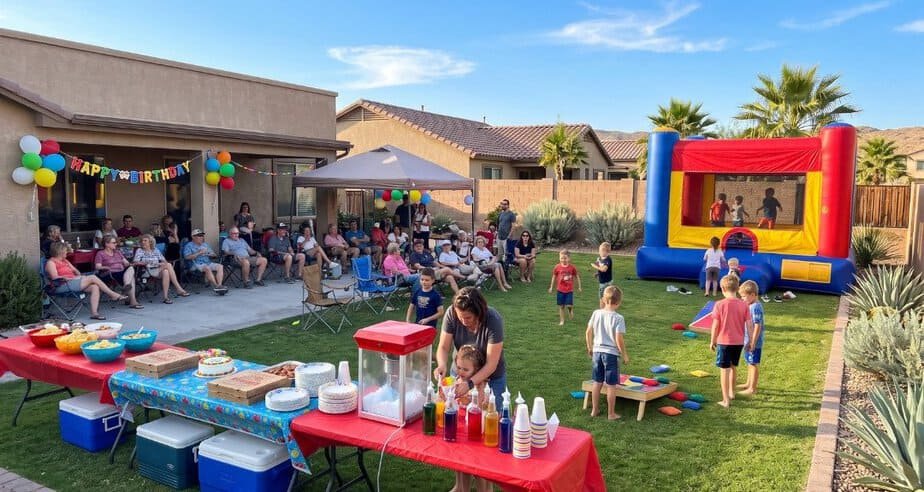
Outdoor family events in St. George can look simple on paper: choose a date, invite guests, order food, and set up a few activities. In practice, heat, limited space, late deliveries, power needs, and mismatched entertainment can turn a birthday party or school gathering into a stressful afternoon. Planning around those problems early protects the host’s budget and gives children a safer, more enjoyable place to play.
Mistake 1: Choosing rentals before measuring the space
A bounce house or water slide may fit the theme perfectly and still be wrong for the property. Before booking, measure the usable area and check for trees, fences, sprinkler heads, low branches, slopes, and overhead wires. Leave room for guests to walk around the equipment, not just the equipment’s footprint.
The surface matters too. A flat grass area may work for one rental, while a driveway or compact yard may require a different setup. If the event is at a park, school, or business location, confirm where deliveries can enter and whether the venue has rules about stakes, generators, water access, or temporary structures.
A rental company such as https://stgeorgefun.com/ can help match equipment to the site when the organizer provides accurate measurements and photos. That conversation is more useful before the reservation than after a delivery crew arrives and finds an obstacle.
Mistake 2: Ignoring Southern Utah weather
Summer heat is one of the most predictable planning risks in the St. George area. A party scheduled for midafternoon may be uncomfortable for adults and exhausting for children, especially around dark-colored inflatables or pavement that holds heat. Consider a morning start, a later evening time, shaded seating, and frequent water breaks.
Wind also deserves attention. Outdoor equipment may have operating limits, and sudden weather changes can affect whether a rental can be safely used. Ask about the company’s weather policy before paying a deposit. If the forecast changes, you should know whether the event can be rescheduled, moved, or adjusted without losing the entire rental cost.
Mistake 3: Booking entertainment without planning the full guest experience
One large attraction does not automatically solve the party plan. Younger children may need a calmer activity while older kids use an obstacle course or water slide. Guests waiting for a turn still need shade, seating, food, and something to do.
A better plan combines the main attraction with practical support. Tables and folding chairs help create an organized food area. Yard games can keep guests involved when an inflatable is occupied. Concessions such as popcorn, snow cones, or cotton candy can add variety, but they also require serving space, power, and cleanup supplies.
For larger gatherings, restroom access should be considered before the guest list grows. A nearby indoor restroom may be enough for a backyard birthday, while a community event or business promotion may need additional facilities, including accessible options.
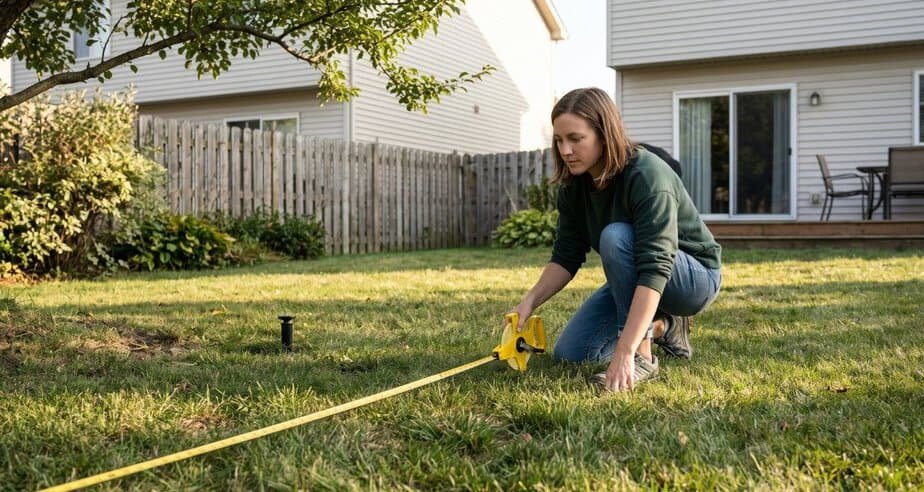
Mistake 4: Treating delivery and setup as minor details
The event timeline should include more than the party’s advertised start time. Ask when the crew will arrive, how long setup takes, where vehicles will park, and what must be cleared before delivery. If the attraction needs electricity or water, identify the connection point in advance and keep extension cords, hoses, and walkways away from high-traffic areas.
Assign one adult to meet the delivery team and review the setup. That person can answer questions about entrances, supervise children while equipment is installed, and confirm that the site is ready before guests arrive. It is a small responsibility that prevents confusion on a busy day.
A smoother event starts with fewer assumptions
The best outdoor family events are not necessarily the most elaborate. They are the ones where the site, weather, activities, guest ages, access needs, and timing have been considered together. Confirm those details early, keep a backup plan for heat or wind, and choose rentals that fit the property rather than forcing the property to fit the rental. The result is less last-minute spending, fewer safety concerns, and more time for families to enjoy the event.
Read next: A Healthier Las Vegas Getaway
References
Grundstein, A., Shepherd, J. M., & Duzinski, S. (2017). Do inflatable bounce houses pose heat-related hazards to children? Bulletin of the American Meteorological Society, 98(5), 893–897. https://doi.org/10.1175/BAMS-D-16-0103.1
Knox, J. A., Gill, T. E., Williamsberg, C. A., Smith, J. M., Boggs, L. V., Black, A. W., & Skypek, H. E. (2022). Wind-related bounce house incidents in meteorological, regulatory, and outreach contexts. Bulletin of the American Meteorological Society, 103(10), E2323–E2340. https://doi.org/10.1175/BAMS-D-21-0160.1
McGarr, G. W., Saci, S., King, K. E., Topshee, S., Richards, B. J., Gemae, M. R., McCourt, E. R., & Kenny, G. P. (2021). Heat strain in children during unstructured outdoor physical activity in a continental summer climate. Temperature, 8(1), 80–89. https://doi.org/10.1080/23328940.2020.1801120
Vanos, J. K. (2015). Children’s health and vulnerability in outdoor microclimates: A comprehensive review. Environment International, 76, 1–15. https://doi.org/10.1016/j.envint.2014.11.016
Vukcevich, O., Schomberg, J., Wallace, E. L., Reyna, T., Gholizadeh, M., Ferguson, M., Guner, Y. S., & Awan, S. (2022). Distribution of injury in inflatable jumping amusements in the U.S. over the last 20 years. Journal of Pediatric Surgery, 57(5), 908–914. https://doi.org/10.1016/j.jpedsurg.2021.12.054