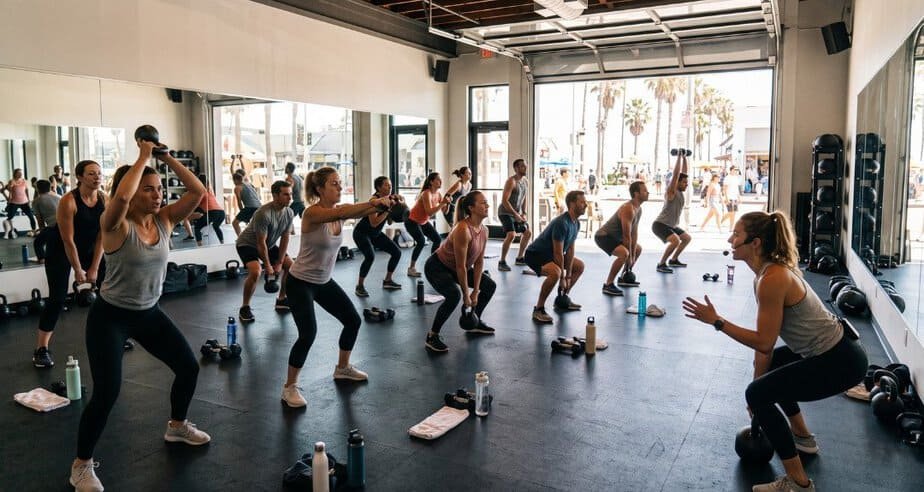
There’s no universal winner between training alone and joining group fitness classes in Santa Monica. The format you can picture doing in six months is a better starting point than the one that looks tougher on paper. The choice comes down to how much direction you want, what your week allows, and what you enjoy enough to repeat.
Solo workouts put you in charge of every detail
Solo training puts you in charge of exercises, rest, and when to stop. That freedom suits people who like quiet focus or odd hours.
You can lift at a gym, train at home, or run and walk through nearby parks and beach paths. There’s no start time to miss, even if work pushes your session to nine at night.
The trade is planning everything yourself. You choose the progression, judge your form and persuade yourself to finish when no one’s around.
Some people love that responsibility. It feels calm and efficient to record weights and reps in a notebook or phone note, repeating basic movements and adding a little over time.
Others shorten sessions without outside structure. They skip warm-ups, let messages disrupt rest periods or leave exercises out because no one will know.
Solo training still takes setup. Gym users travel, change, and wait for racks at busy times; home workouts need space, basic gear, and a suitable plan.
Form checks need a plan too. A mirror or recording may help you notice how a movement changes as you tire, but neither replaces qualified feedback when you’re unsure. If filming is permitted, keep others out of the frame. Consider a coaching session to learn unfamiliar exercises rather than trying to diagnose every technique issue yourself.
Solo work suits people who want control and don’t mind being their own coach and timekeeper.
Group fitness classes put structure around your effort
A group class removes most decisions. You arrive at a set time and follow an instructor through the warm-up, main work, and cool-down, adjusting effort to your level.
That helps on low-energy days. There’s no workout to invent or next step to guess, and the room moves with the clock.
When comparing options in Santa Monica, look beyond the class name. Strength circuits, cycling and interval sessions offer different experiences from yoga or Pilates, but intensity varies within each format too. Read descriptions and ask about beginner options. A quieter room isn’t necessarily an easier workout, and music alone won’t tell you how much jumping or lifting to expect.
Some people keep moving more easily alongside others. Shared rhythm discourages stopping early, while familiar faces and an instructor who knows your name make skipping feel less anonymous.
Others find classes distracting. Waiting for cues or following someone else’s timer can feel uncomfortable, especially when their body needs an easier pace.
Neither reaction is wrong. Classes can lighten your mental load if you like fixed times and direction; if you prefer your own speed, they can feel restrictive.
Where personal training fits between the two
Be clear about what a group instructor can and can’t do.
Instructors demonstrate movements and cue the room, sometimes correcting form or suggesting easier or harder options. Beginners get useful guidance without paying for one-on-one time.
They can’t watch everyone constantly. In a room of twenty, attention comes in short moments, rather than a full program built around your injuries, sport or schedule with weekly lift tracking.
Personal training can provide focused feedback and a plan tied to your history and goals. Ask how the trainer assesses technique, tracks progress and adapts sessions. That attention can be useful for specific strength targets, returning after a break or learning barbell lifts. Neither a group instructor nor a personal trainer replaces medical care or rehabilitation when those are needed.
One-to-one coaching is generally a larger investment per session, so compare actual quotes and what’s included. Some people choose a short block to learn basics; others value ongoing review.
You could mix both over time: personal training to learn squats, hinges, and presses, classes for conditioning, then a coaching check-in to review technique or progress. It needn’t be either-or.
Think of it this way:
Group guidance is shared, and general, personal guidance is focused and specific.
Try before you commit
You don’t need to decide your fitness identity in a week. Test what holds in real life.
Try drop-in sessions where available, sampling mornings and evenings that could fit your week. Notice the door-to-door journey in normal traffic and whether the effort feels manageable during and after class.
Notice coaching style too. High-energy, talkative instructors and calm, sparing cues can both work; choose the voice that helps you move well and return.
Browse Training Mate’s Santa Monica fitness class schedule before paying for anything long term. Look for formats suited to your level and time windows you can protect.
Give each format two or three visits. The first involves nerves and new names; the second reveals more about the workout, and the third about whether the schedule is livable.
Don’t sign a long contract after one great Saturday class. A Tuesday at six when work overruns is different, so choose for your normal week.
Make the logistics work in Santa Monica
A workout has to fit somewhere in your actual week. Rather than assuming a nearby option will work, test the whole journey and time commitment.
Map where you are at seven, lunch and six, and the journey from each place. Include parking or bike storage, late meetings and school pickup.
Classes need a fixed slot plus travel. A studio on your usual route may be easier to reach than one requiring repeated special trips across town. Think beyond the first enthusiastic week to a busy month when that extra journey could feel like a chore.
Solo training still needs a window. Gyms involve travel, changing and shared gear at rush hour; home or outdoor sessions avoid commuting but need protection from chores and screens.
If you’re considering beach runs or park workouts, account for weather, daylight and air quality. Have an indoor or shorter-session backup when outdoor conditions aren’t suitable. Decide what you’ll do after a late workday rather than relying on making a fresh plan when you’re tired.
Childcare and shifts matter too. Parents may train before school or after bedtime, while service workers’ split shifts complicate fixed times. Solo sessions can move; calendar bookings can protect class time.
Ask yourself: can I get there twice a week without heroic effort? If it requires luck and perfect traffic, look closer to home or work.
Equipment and atmosphere matter, but a beautiful studio isn’t much use if you can’t reach it. Look for a workable route and a fallback slot before committing.
How cost plays out in real life
A monthly gym fee buys open access, while a per-class price buys a led session at a set time, with coaching and a reserved spot. They’re different products.
A simple way to compare without fooling yourself
Count what you use. Monthly gym access used twice means a high cost per visit; using all eight class credits gives the cost you planned. Attendance tells you more than sticker price.
Calculate sessions for a normal month and the price per visit, then consider a busy month when travel or illness halves attendance.
Include extras. Solo gym use may involve gas, parking, laundry and gear; classes may involve booking fees or late cancel charges when schedules change. Both affect the math.
Neither path is always cheaper. Prices vary by gym, studio and frequency: four solo visits weekly may make gym access good value, while infrequent attendance may favor paying per visit despite a higher individual price.
The best value isn’t automatically the lowest advertised price, or the option you attend most. Balance what you can afford with how often you’ll realistically go and what guidance you need. Avoid committing to more credits than your calendar can accommodate.

How progression and recovery feel solo and in a group
Solo lifters control weights, sets and rest. Keeping the same lifts for months and adding small increases suits steady strength building because nothing changes unless they change it.
Class goers progress through consistency and effort within a template, with workouts varying by day and instructor. Progress may mean work capacity and movement skills rather than heavier weekly lifts; some enjoy that mix, while others miss a solo log’s clear numbers.
For a first pull-up or heavier squat, solo blocks or personal coaching often make tracking clearer. For regular movement and feeling strong through the week, classes provide a ready-made plan.
Recovery needs attention in both paths. Training alone lets you change the session immediately, but it also makes you responsible for recognizing when to ease off. In a group, the schedule can tempt you to book another hard class before you’re ready. Neither format removes the need to rest.
Plan easier days around demanding sessions and avoid adding intensity just to match someone else. Yoga and Pilates aren’t automatically recovery workouts; read the description and consider how strenuous the session is for you. A comfortable walk or a rest day may be the better choice.
What a flexible hybrid could look like
One way to test both formats is a manageable solo strength session and a group class on separate days, with room between them to recover. Keep other activity comfortable while you learn how you respond. This is an experiment, not a complete prescription; your goals, health, and starting point may call for something different.
Record more than repetitions or bookings. Note which session you looked forward to, how easy it was to get there, and whether you felt ready for your next workout. If fatigue or discomfort keeps building, reduce the workload and seek appropriate advice for persistent symptoms.
At the end of a few ordinary weeks, review those notes alongside your budget. Keep the solo sessions if autonomy helps you follow through. Keep the classes if direction and shared energy work for you. If both serve different needs, there’s no reason to choose a single fitness identity. Build a routine you can adjust as your life changes.
Read Next: Top Benefits of Fitness Exercise: A Complete Guide